

Common Planet · A project for economic liberation

What Kind of World Do You Want to Live In?

We have the knowledge, technology, and resources to build a world where everyone can thrive. What's missing is an economic system designed to make it possible.

Common Planet is the global initiative building that alternative: an economy designed around life rather than debt, extraction and the accumulation of financial power.

Scroll to begin

01 · The problem

We've been playing the wrong game.

Today's economy puts financial capital and accumulated ownership at the center. People, communities and the living planet are arranged around it, and access to life itself depends on having money.

Billions of people live inside these rules every day: working to service debts, paying to stay housed, watching what was shared become owned. It can feel like gravity. It isn't.

The rules of the current game

  1. Money begins as debt.

    Most new money enters the economy as bank loans that must be repaid with interest. To keep it flowing, someone, somewhere, must keep borrowing.

  2. Life comes with a price tag.

    Food, shelter, health care and education go to those who can pay. Without money the basics stay out of reach, however abundant they are.

  3. Money flows toward money.

    Interest, rent and returns on ownership move wealth to those who already hold it, and concentrated wealth becomes concentrated power.

  4. Nature counts only when it's sold.

    A standing forest adds nothing to the numbers we steer by. Cut down and sold, it does. The rules reward extraction.

What sits at the center?

Today's gameEverything orbits financial capital. Human needs sit further out, and the living world is pushed to the very edge, counted only when it can be bought and sold.CapitalAT THE CENTERLifeAT THE CENTERDebtInterestOwnershipProfitWorkShelterFoodHealthCareLearningForestsWaterSoilClimate

Today's game

Everything orbits financial capital. Human needs sit further out, and the living world is pushed to the very edge, counted only when it can be bought and sold.

  • Money
  • Needs
  • Nature
  • Contribution
  • Tools
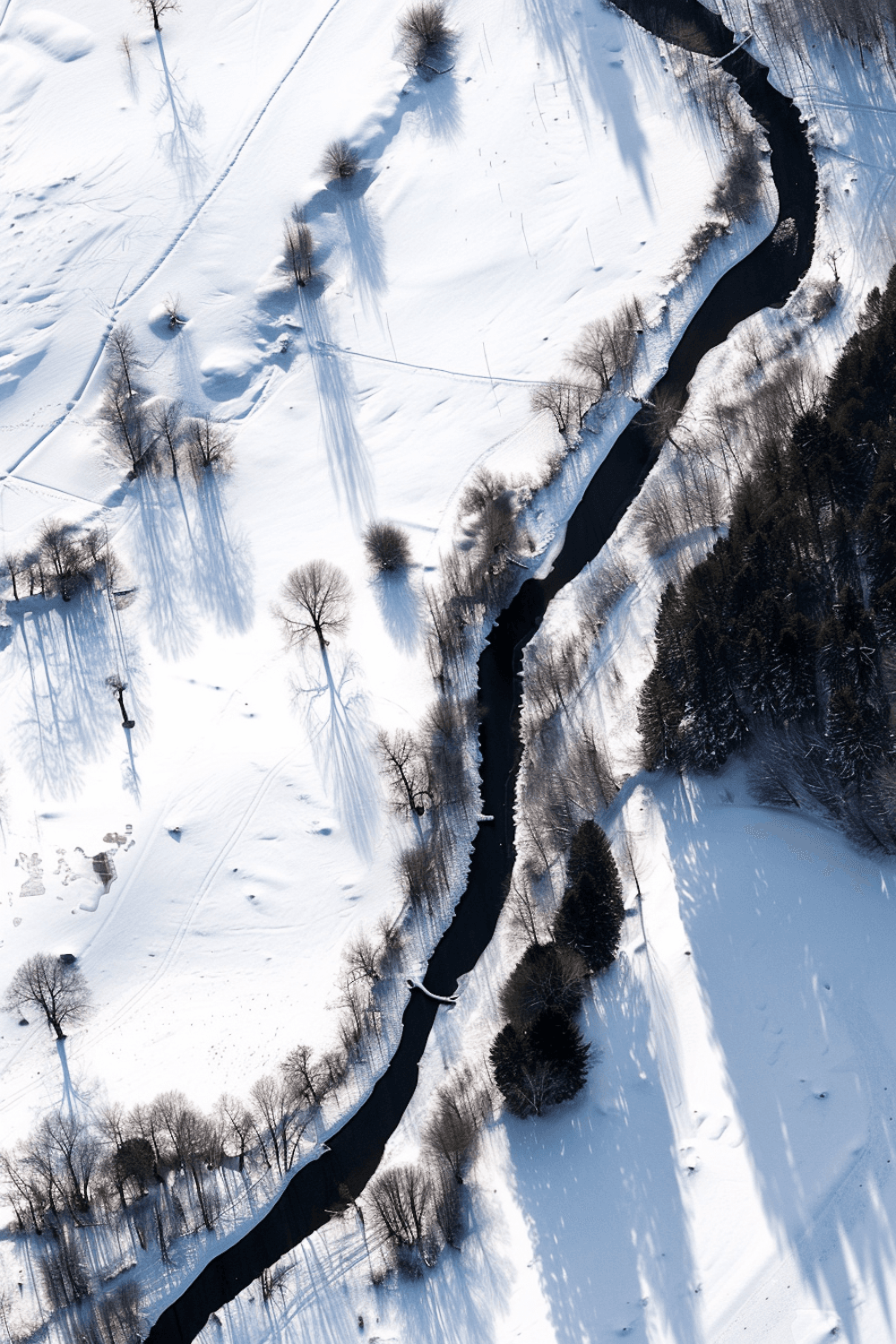
Aerial view of a dark river winding through a snow-covered valley scattered with trees
Rivers change course. So can economies.

None of this is a law of nature. Money, debt, ownership and markets are institutions. People designed them, wrote them into law, and have rewritten them many times throughout history.

We can change the rules.

See how

02 · The solution

The Three Reclaims

Creditism rests on three shifts. Each one takes back something we handed to a system that no longer serves us, and returns it to people and the planet.

Friends laughing and passing food to one another across a shared table
I

ReclaimCredit

From debt to dignity

Credit is issued directly to people, for life itself and for the contributions they make, instead of being lent into existence as debt.

  • Life Credit keeps the basics within everyone's reach
  • Contribution Credit recognizes work, care and creativity
  • No interest, and no debt to repay
Aerial view of a misty old-growth forest with a river winding through it
II

Reclaimthe Commons

From extraction to stewardship

Land, water, knowledge and shared infrastructure are stewarded democratically, for everyone alive today and every generation still to come.

  • Shared resources governed by the people who depend on them
  • Nature valued for sustaining life, not only when it's sold
  • Long-term care built into every decision
Neighbors of all ages gathered in a circle under trees, listening to an older woman speak
III

ReclaimPower

From accumulation to shared power

Credit deletes when it's spent instead of passing to the seller and piling up, so money can no longer harden into power over other people.

  • Credit is spent once, then it disappears
  • No hoards to buy influence or control
  • Economic choices shaped democratically

Together, the Three Reclaims form the basis of Creditism, a proposed economic architecture designed around life.

Explore Creditism

03 · How Creditism works

Credit that serves life, then disappears.

In today's economy, money changes hands and keeps going, gathering wherever it can earn more. Creditism proposes a different cycle, one in which nothing piles up.

In Creditism, Credit is issued to people for life and to contributors for what they provide. When you spend Credit it is deleted, while goods and services flow to you.
  • Credit
  • Goods and services

Follow the Credit

A smiling woman in an orange cap and cardigan standing in an open field
Students working through notes and books together around a table
A human hand reaching toward a hand made of green leaves

A planetary membership network

Built by its members, one relationship at a time.

05 · The AYU Network

Where the new economy is built together.

The AYU Network is the emerging planetary membership network of Common Planet. It's where people meet across borders, collaborate, build trust with one another, and help design and test the foundations of Creditism in practice.

  1. 01

    Join

    Become a member and tell us how you'd like to take part.

  2. 02

    Collaborate

    Work with people near you and around the world on shared projects.

  3. 03

    Establish trust

    Build a web of trust grounded in relationships and contribution, not credit scores.

  4. 04

    Build and test

    Help shape and test the tools and agreements Creditism will need.

Our belief

The economy is not a force of nature.It is a game we designed.And we can design a better one.
  • 01

    Life at the center

    Every design choice begins with what sustains people and the living world.

  • 02

    Contribution counts

    Work that adds to life is recognized, whether or not a market pays for it.

  • 03

    Commons for all

    What we depend on together, we steward together.

  • 04

    Power stays shared

    No one should be able to accumulate control over everyone else.

07 · Questions

Questions worth asking.

New ideas deserve hard questions. Here are the ones we hear most often.

Ask us something else
Is Creditism a cryptocurrency?

No. Credit in Creditism isn't a token to trade, mine or speculate on. It's issued for life and contribution and deleted when it's spent, so there's nothing to hoard and nothing to bet on. Technology may help run it, but Creditism is an economic architecture, not a coin.

If Credit deletes when it's spent, how do sellers get paid?

Producers and contributors receive newly issued Contribution Credit for what they provide. The buyer's Credit disappears and the seller's arrives fresh, so value is recognized without Credit ever piling up in a few hands.

Does this mean the end of work?

No. It means work is no longer the only door to survival. Life Credit is designed to keep the basics within everyone's reach, while contribution, including the care and community work today's markets ignore, is recognized and rewarded.

Isn't this utopian?

Every economic system was designed by people solving the problems of their time. Creditism is a proposal to be researched, debated and tested, starting at a human scale through the AYU Network, and improved by what we learn along the way.

Is Common Planet a political party?

No. Common Planet is a nonprofit-led initiative, not a party or a campaign. Its work is research, education, and building foundations that people can join and test for themselves.

How can I help right now?

Join the AYU Network, share these ideas with people you trust, or get in touch if you'd like to contribute research, skills or support to the Foundation.

The next economy

The next economy will be built by the people who choose to build it.

Join a planetary network of people who believe humanity can design a better economic game, and help lay its foundations.